Carpenter bees drill clean round holes into eaves, decks, and trim, and the real damage often comes second - woodpeckers tear the wood apart to eat the larvae inside. We treat the galleries, seal the holes, and protect the wood.
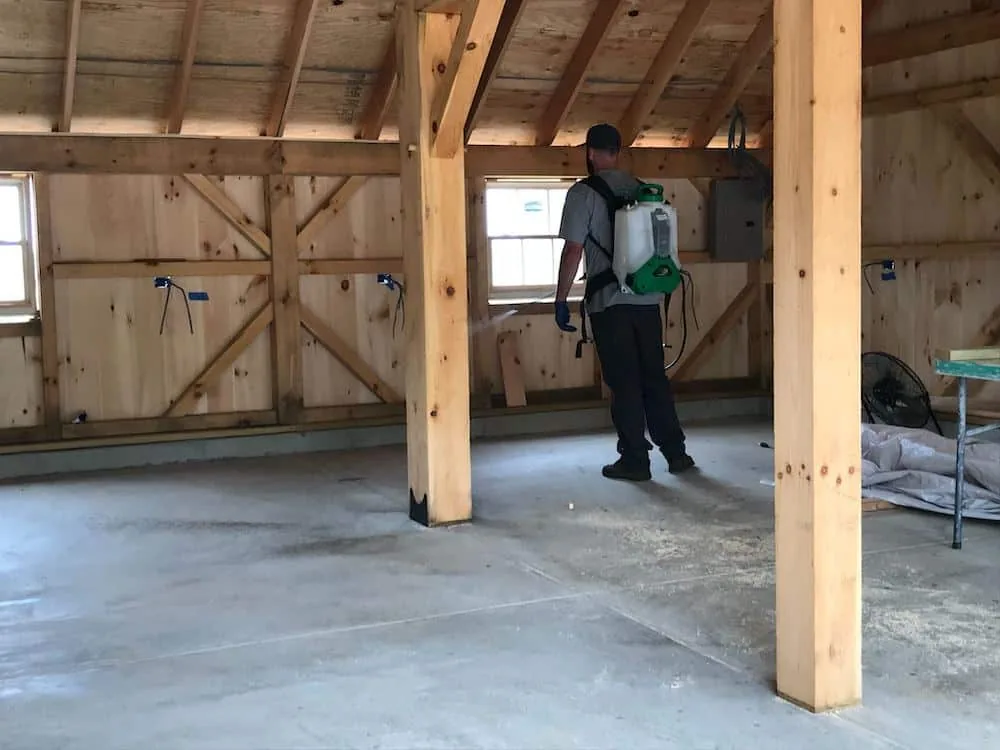
Treat the gallery, then seal it. Sealing an untreated hole traps active bees and invites woodpeckers.
Find the bore holes and galleries in eaves, fascia, decks, railings, and trim, and assess any woodpecker damage already started.
Treat the active galleries so the bees and larvae inside are handled before the holes are closed.
Seal the treated holes and advise on finishes and protection that make the wood a poorer target next season.
Carpenter bees return to the same wood year after year and the tunnels widen over time. The woodpecker damage that follows is often worse than the bees, which is why early treatment matters.
Carpenter bee work folds into residential pest control for year-round coverage.
Carpenter bee control across the Manassas area. Pick your town for local detail.
Sealing an untreated hole traps active bees, which can bore out through fresh wood, and it leaves larvae that woodpeckers will dig for. Treating the gallery first and then sealing is the order that works.
Often the bigger part. Woodpeckers tear open the wood to eat carpenter bee larvae, and that secondary damage can dwarf the bore holes themselves. Treating the bees early heads it off.
Carpenter bees return to the same wood, so untreated trim is a repeat target. Treatment, sealing, and seasonal prevention together break that pattern.
Females can but rarely do, and males that hover aggressively have no stinger. The damage to the wood is the real issue, not the sting.
One visit treats the galleries, seals the holes, and protects the wood.