Raccoons get into attics, chimneys, and crawl spaces, and a female will tear a roofline apart to den. We remove them, check for young, seal the entry with branded exclusion products, and clean up the latrine they leave behind.
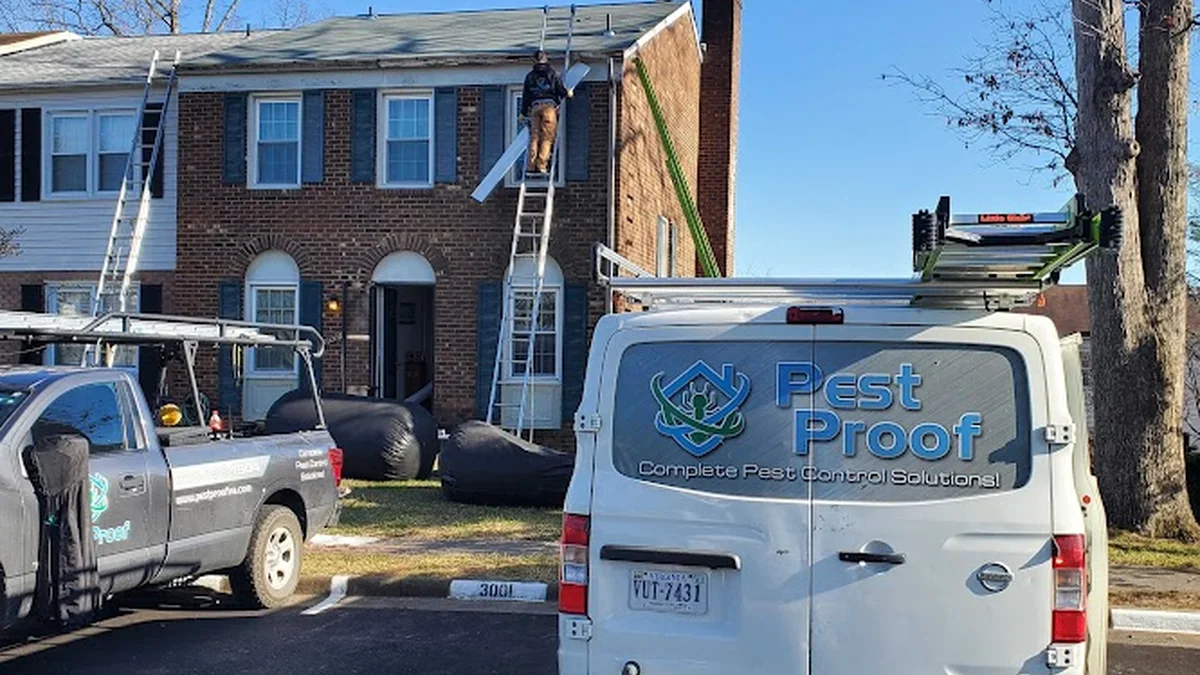
Spring and early summer mean a denning female often has young, so removal has to account for the whole family, not the one you saw.
Find the den, the entry, and any sign of young. Removing a mother and sealing the entry while pups are still inside is the mistake we avoid.
Remove the raccoon and any young together, on site, with methods that follow Virginia wildlife regulations.
Reinforce and seal the entry with branded exclusion products, then clean and remediate the latrine and any contaminated insulation.
Raccoons are strong, smart, and destructive when denning. The lasting fix is removal plus a reinforced entry seal, because an open roofline is an open invitation to the next one.
This is part of our full wildlife removal and exclusion program. Damage repair and cleanup run through home repair and attic insulation.
An inspection first. In spring and summer a female in the attic usually has young, and the removal has to include them. We locate the den, remove the family, and seal the entry so it does not reopen.
Yes. Raccoon latrines can carry roundworm and other pathogens, and the waste soaks into insulation. Cleanup and remediation are part of the service.
We reinforce and seal the entry with branded exclusion products. Raccoons are strong, so a light patch fails - the seal has to be built for the animal.
Yes. Removal follows Virginia wildlife regulations, which is part of why this is professional work and not a DIY trap from the hardware store.
One inspection finds the den, checks for young, and sets the removal and exclusion plan.