Spiders follow the bugs they eat. Knock down the webs and treat the perimeter, and you remove both the spiders and the smaller insects drawing them in. We also treat targeted for medically significant species.
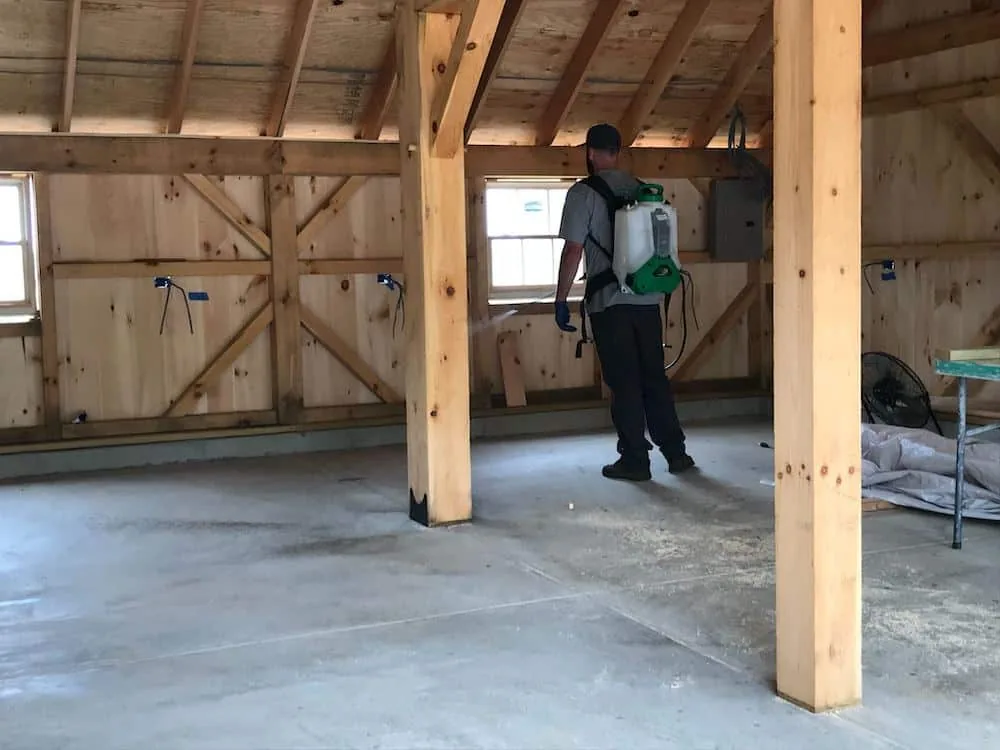
Spiders are a sign of an insect food supply. We treat the spiders and the prey that brought them.
De-webbing of eaves, corners, window frames, and harborage points, including egg sacs so the next generation does not hatch in place.
Targeted treatment at entry points and harborage, plus the general insect control that removes the prey spiders feed on.
Extra attention to medically significant species such as black widow and brown recluse where activity is found.
Most house spiders are harmless nuisances. The two worth real caution in Virginia are the black widow and, less commonly, the brown recluse - we treat those as a priority when we find them.
For the recurring household program that folds this in, see residential pest control.
Spiders go where the food is. A high spider count usually means a healthy population of smaller insects around the home. We treat both, which is why spider numbers stay down after the prey is reduced.
Most are harmless. Virginia has two species worth caution - the black widow and the brown recluse. If we find either, we treat the harborage as a priority and show you where they were active.
De-webbing plus perimeter treatment makes an immediate difference. Ongoing control comes from keeping the prey insects down, which is why most clients fold spiders into the recurring plan.
Yes. We knock down webs and egg sacs as part of the service so you are not left cleaning up after the treatment.
One inspection clears the webs, treats the perimeter, and flags any species worth caution.