Wildlife gets in through roofline and gable gaps, open soffits, uncapped chimneys, and grade-level openings, often gaps far smaller than people expect.
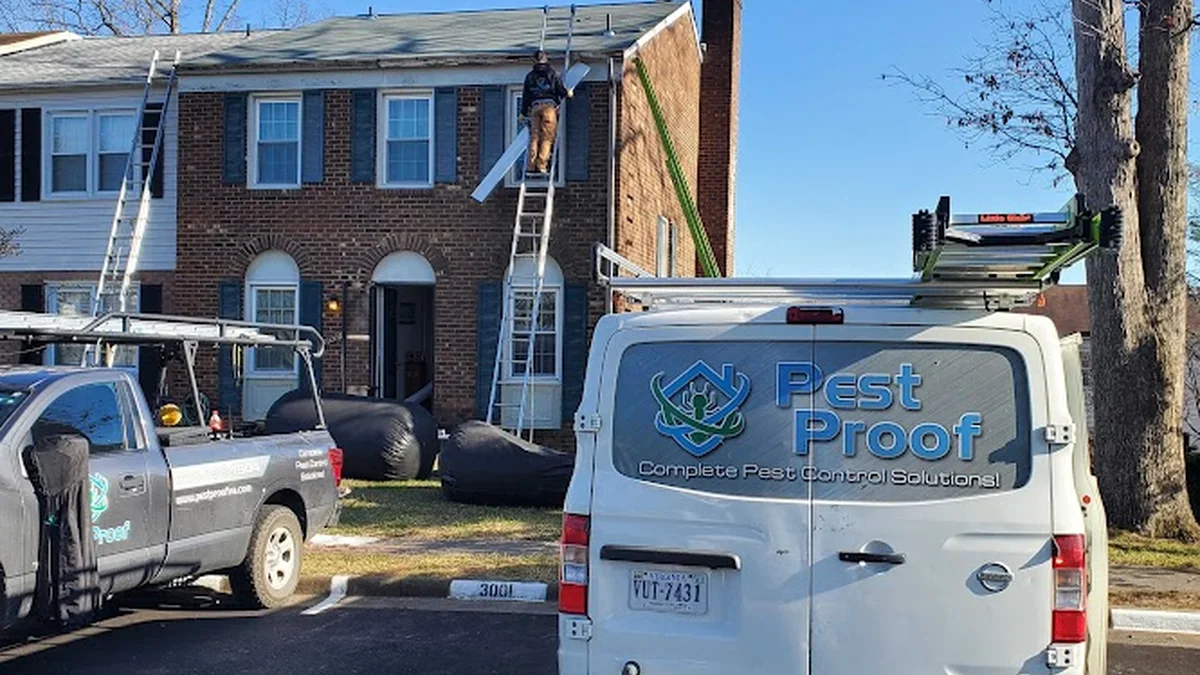
The roofline is the most common entry. Squirrels, raccoons, and birds exploit gaps where the roof meets the fascia, loose or chewed soffit, and gable vents with failed screening. From there it is a short step into the attic.
Chimneys without a proper cap are an open door for raccoons and birds, and dryer and bath vents on the exterior are frequent bird and rodent entries. At grade level, gaps around utility penetrations, deck framing, and foundation openings let in skunks, groundhogs, and mice - a mouse needs a hole the size of a dime.
Finding every opening is the detailed part of the job, because one missed gap is the one the next animal uses. We map the entries during the inspection and seal them with branded exclusion products built to hold against wildlife pressure.
This is part of our wildlife removal service across the Manassas and Northern Virginia area.
Light gaps, maybe. Wildlife pressure on a roofline needs branded exclusion products installed to hold, which is the difference between a patch and a permanent seal.
Always. Sealing an entry with an animal still inside traps it. We remove first, then seal.
Schedule an inspection or call 703-853-1904. We will give you a straight answer for your home.