Carpenter bees drill into eaves and trim, and woodpeckers follow to dig out the larvae. The second problem is often worse than the first.
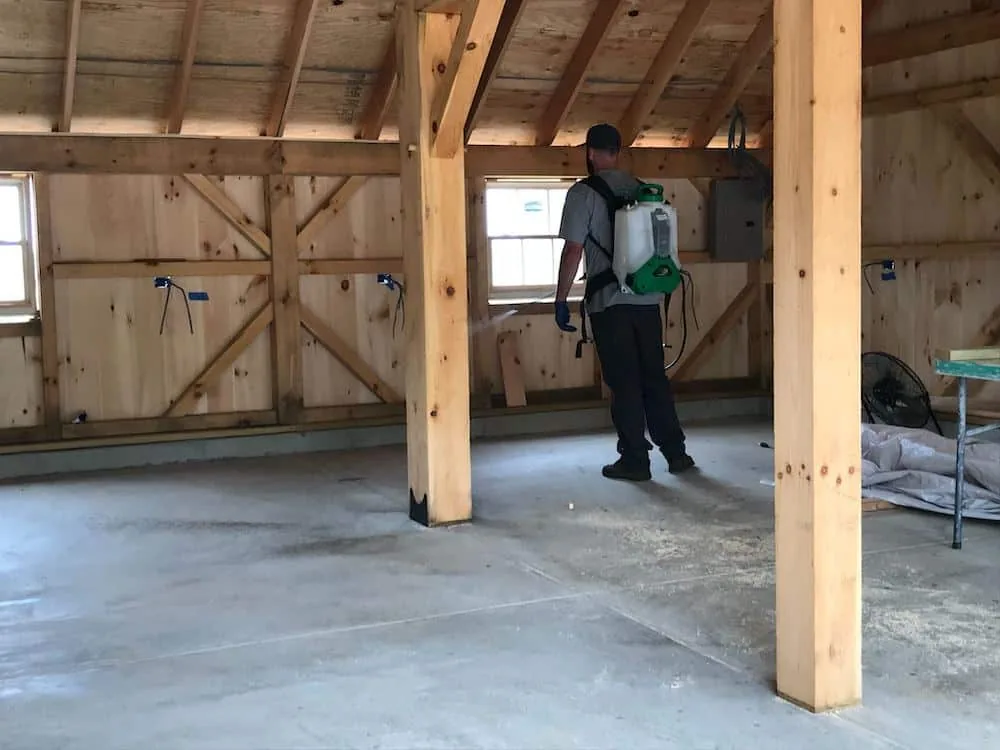
Carpenter bees bore clean, round holes into eaves, fascia, decks, and trim to nest, and they return to the same wood year after year, widening the tunnels over time. On their own they are a slow structural nuisance.
The bigger damage often comes second. Woodpeckers hear and dig for the larvae inside the galleries, tearing open the wood far beyond the original holes. Breaking the cycle means treating the galleries early, sealing the holes after treatment, and protecting the wood so it is a poorer target next season.
Need a hand? See our carpenter bee control service, or browse more in resources.
Females can but rarely do; aggressive-looking males have no stinger. The wood damage is the real issue.
Sealing an untreated hole traps active bees and leaves larvae for woodpeckers to dig out.
Schedule an inspection or call 703-853-1904. Local, founder-led service across Northern and Central Virginia.